Benefits of extra virgin olive oil (good for liver detox)


We will discuss this.
-Key nutrients in extra virgin olive oil
-Benefits of Extra Virgin Olive Oil
-Discussion of benefits
-Daily dose of olive oil and use
-Do not heat olive oil
-What types of olive oils exist?
-What is the difference between virgin and extra virgin olive oil
-What should the packaging of a good olive oil be like
-Avoid oxidation in olive oil bottles. Buy smaller bottles.
-Videos
Key nutrients in extra virgin olive oil
The most important nutrients in olive oil are:
-Polephenols (high in antioxidants)
-Vitamin E
-Healthy fats (monounsaturated fats)
-Oleic acid,
-Oleocanthal,
-Hydroxytyrosol
-Phytosterols

Benefits of Extra Virgin Oil
Extra virgin olive oil is obtained through the first cold pressing of olives, whereby the nutrients and properties are preserved.
Benefits at a glance
-High antioxidants
-Healthy fats
-Anti-inflammatory
-High antioxidants
-Antimicrobial
-Good for heart health
-Good for brain health
-Good for bowel function
-Good for digestion
-Good for the liver
TIP: If you take olive oil as a supplement to detox and nourish your gut and liver, use ONLY extra virgin olive oil .
Companies often mix processed vegetable oil with olive oil. Vegetable oils are heavily processed. If you take it as a supplement, make sure you take 100% pure extra virgin olive oil.
Use only the highest quality and buy a small bottle of 100ml or a maximum of 250ml. Only buy dark glass. As soon as the bottle has been opened, it starts to oxidize. So you must consume it quickly.
Discussion of benefits
1- High in polyphenols (antioxidants)
Extra virgin olive oil has a high polyphenol content (HP-EVOO), often characterized by high concentrations of oleocanthal and oleuropein.
According to a 2018 study published in the International Journal of Molecular Sciences, olives and olive oil contain high concentrations of antioxidants that help reduce morbidity and/or may reduce the development of cardiovascular disease, neurodegenerative disorders, and cancer. See article
Extra virgin olive oil shows a strong reduction in heart and blood vessel diseases, neuroprotective and anti-cancer effects, improvement of liver function, and reduction of inflammation.
Extra virgin olive oil can improve insulin sensitivity, thanks to its antioxidant properties. See article .
Sicilian olive oil with high polyphenols.
2-Anti-inflammatory and immune regulation
Extra virgin olive oil (EVOO) has a significant anti-inflammatory effect and modulates the regulation of the inflammatory response and immune balance.
Compared to a high-fat diet and a diet with extra virgin olive oil, the consumption of extra virgin olive oil showed a greater anti-inflammatory effect. See article .
In this article, they conclude that polyphenols are anti-inflammatory. Extra virgin olive oil has high polyphenols.
Extra virgin olive oil is rich in antioxidants such as polyphenols and vitamin E, which inhibit inflammation and thereby lower the risk of chronic diseases.
3-Healthy fats
Extra virgin olive oil is rich in monounsaturated fats
Studies show that oleic acid lowers inflammation levels and oxidative stress. See article .
Olive oil, particularly extra virgin olive oil (EVOO), is an essential part of a healthy diet. It consists of approximately 75% heart-friendly monounsaturated fats (oleic acid).
4-Protection and detoxification of the liver
Extra virgin olive oil (EVOO) is beneficial for the liver because it reduces inflammation, oxidative stress, and fat accumulation, primarily thanks to its high content of antioxidants, polyphenols (e.g., hydroxytyrosol), and monounsaturated fats (oleic acid).
Extra virgin olive oil can improve insulin sensitivity, stimulate metabolism, and activate liver-protective signaling pathways, thereby helping to prevent non-alcoholic fatty liver disease (NAFLD).
Extra virgin olive oil (EVOO) promotes liver health by:
-to reduce fat accumulation
-To reduce inflammation
-To reduce oxidative stress thanks to the high antioxidants and the high content of monounsaturated fats (oleic acid) and phenolic compounds.
-It helps in the treatment or prevention of non-alcoholic fatty liver disease (NAFLD) by improving insulin sensitivity and lowering liver enzymes.
Key benefits of extra virgin olive oil for the liver at a glance: See other article
Reduces fatty liver (steatosis):
Extra virgin olive oil reduces the accumulation of triglycerides in the liver and helps lower liver fat content, which contributes to the treatment of non-alcoholic fatty liver disease (polluted liver).
Anti-inflammatory and antioxidant effect:
Polyphenols (antioxidants such as hydroxytyrosol and oleuropein) in extra virgin olive oil protect liver cells against oxidative damage and thus prevent the progression of liver diseases.
Improves insulin sensitivity:
Extra virgin olive oil helps regulate blood sugar levels and improves insulin resistance, which is closely linked to the metabolic health of the liver.
Combats metabolic dysfunction:
It acts as a protective agent against mitochondrial dysfunction and endoplasmic reticulum stress in liver cells. Protect your mitochondrial function.
Maintains a healthy lipid profile:
Regular consumption of extra virgin olive oil can reduce inflammation, thereby reducing the burden on the liver.
See table for which substances benefit and improve liver function. See article .
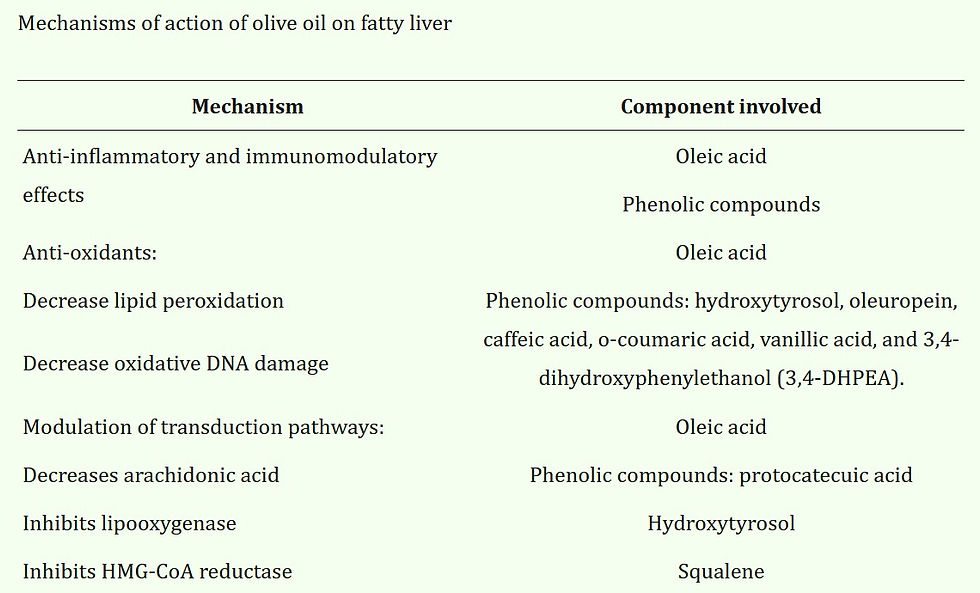

Gut health and digestion
Extra virgin olive oil (EVOO) promotes gut health and digestion by reducing inflammation, stimulating digestive enzymes and bile, and balancing a healthy microbiome, and supports the integrity of the intestinal wall.
Key benefits for the intestines and digestion:
Relieves constipation: Acts as a natural lubricant in the intestines, softening the stool and making bowel movements smoother.
Reduces inflammation: Contains antioxidants such as oleocanthal that soothe the digestive tract and help fight conditions such as inflammatory bowel disease.
Balances the microbiome: Extra virgin olive oil acts as a prebiotic and promotes the growth of beneficial gut bacteria (e.g., Bifidobacterium and Lactobacillus) while limiting harmful pathogens.
Promotes digestion: It stimulates bile production and the production of pancreatic enzymes, allowing food to be broken down more efficiently and nutrients to be absorbed better.
Protects the intestinal barrier: It helps improve the intestinal barrier and may therefore potentially reduce the symptoms of a "leaky gut".
6-Anti-cancer effects
According to a 2018 study published in the International Journal of Molecular Sciences, olives and olive oil contain high concentrations of antioxidants that help reduce morbidity and/or may reduce the development of cardiovascular disease, neurodegenerative disorders, and cancer. See article
Olives (especially those not exposed to high temperatures) are packed with antioxidants, such as acteosides, hydroxytyrosol, tyrosol, and phenylpropionic acid, as well as lignans and flavones.
They also contain substances that have a positive influence on the immune system, along with anti-cancer substances (such as squalene and terpenoids) and the oxidation-resistant lipid oleic acid. See article
Researchers believe that the high consumption of olives and olive oil in Southern Europe likely makes a significant contribution to cancer prevention and health within the Mediterranean diet. See article .
7-Protection of heart & blood vessels
Thanks to its high antioxidants, anti-inflammatory effect, and liver detoxification properties, extra virgin olive oil can offer protection for the heart and blood vessels. See article .
Extra virgin olive oil helps counteract inflammatory responses and age- and disease-related changes to the heart and blood vessels. See article
Olive oil also has vasodilating effects that contribute to a lower risk of atherosclerosis. Cells can remain supple by eating healthy fats. See article .
The protective effects of a Mediterranean diet, rich in alpha-linolenic acid (ALA) from olive oil, have been demonstrated in many studies. Some studies conclude that this type of diet can reduce the risk of cardiac death by 30 percent and of sudden cardiac death by 45 percent.
8-Olive oil affects body weight and body composition
Because olive oil is high in antioxidants, is anti-inflammatory, and can cleanse the liver, it has an effect on body weight.
According to a study with overweight animals and fatty liver disease, weight and the inflammatory response decreased after the intake of olive oil. See article .
In another study involving humans, researchers from one study concluded that adults who followed a high-fat, low-carbohydrate diet lost more weight than those who were randomly assigned to a low-fat diet. It was an analysis of five studies with a total of 447 participants. See article
A similar study, published in the journal Women's Health, showed that a diet enriched with olive oil led to more weight loss than a low-fat diet during an eight-week comparison period. Furthermore, after these eight weeks, participants overwhelmingly chose the diet enriched with olive oil for at least six months of the follow-up. See article .
9-Insulin improvement
Because extra virgin olive oil can protect and detoxify the liver and intestines, reduce inflammation, and provide high levels of antioxidants, insulin also gets the chance to come into balance.
In a study with animals, they observed that after a diet with extra virgin olive oil, blood sugar levels dropped and insulin balanced. See article .
10-Supports brain health
The brain consists largely of fatty acids (+/- 60%), and we need a moderately high amount of healthy fats daily so that the brain can perform its tasks, regulate our mood, and enable us to think clearly.
A deficiency of healthy fats and an excess of toxic substances in your body causes your brain to dehydrate and you develop Alzheimer's or dementia.
It is therefore logical that olive oil is considered a brain food that improves concentration and memory. See article .
Olive oil can help combat cognitive decline by counteracting free radicals, thanks to its high polyphenols (antioxidants).
The polyphenols in Extra Virgin show a strong reduction in cardiovascular risk, protect your brain health , have anti-cancer effects, improve liver function, and reduce inflammation.
A systematic review from 2024 showed that olive oil may lower the risk of developing Alzheimer's disease and cognitive impairment. This is possibly because olive oil can reduce the formation of beta-amyloid plaques, brain inflammation, and oxidative stress. See article
11-Extend your life
In many regions of Italy, people live longer than 100 years. This is due to their diet and lifestyle. However, olive oil is a major reason for their longer lifespan.
Researchers involved in the study in the Journal of the American College of Cardiology analyzed dietary data from 60,582 women and 31,801 men over a period of several decades.
At the start of the study, all participants were free of cardiovascular disease and cancer. The participants' dietary patterns were assessed every four years. See research article .
The research results showed that a higher intake of olive oil was associated with a lower risk of total and cause-specific mortality, that is to say, a lower risk of death in general and a lower risk of death from specific diseases.
Replacing margarine, butter, mayonnaise, and dairy with olive oil was also associated with a lower risk of mortality.
Below are some important findings regarding the link between olive oil and a long life:
-A higher intake of olive oil (more than half a tablespoon per day) was associated with a 19% lower risk of death from cardiovascular disease.
-People who consumed more olive oil had a 17% lower risk of dying from cancer.
-High intake also led to a 29% lower risk of death from neurodegenerative diseases and an 18% lower risk of death from respiratory disorders. See blog Dr. Axe Josh (naturopath)
Daily dose of olive oil and usage
For maximum effect, studies often emphasize the importance of
25 grams or more of olive oil per day as part of a healthy diet, such as the Mediterranean diet.
Quantity: Studies often show that it is beneficial to consume 25-50 ml (approximately 2-4 tablespoons) daily. You can spread this throughout the day and add it to your dishes.
As a supplement, 4 tablespoons is quite a lot. Start with 1 or 2 teaspoons a day. And build up to 1 or 2 tablespoons . Because if you also put olive oil on your dishes and salads, you have to count that as well.
Usage: you can use it in 2 ways
1-Take as a supplement on a spoon or in a shot glass.
2. You can put it on your salad and dishes.
You can combine extra virgin olive oil with lemon for liver and gut health. This provides good support for a liver cleanse.
You can make your own shots or eat it with a spoon. You can also mix it with other spices like ginger or cayenne pepper.
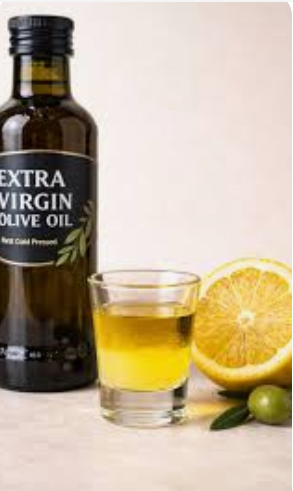
Gezond Wereldnieuws sells pure Extra Virgin olive oil . See webshop.

Don`t heat olive oil to hot.
When you heat vegetable oils, you create two problems:
-You lose your nutrient value
-Due to the heat, the molecules change into trans fats, which is carcinogenic and disrupts your hormones. If you have pure olive oil it`s always better. Don`t heat to hot.
Oils that can withstand high heat
-Butter
-Ghee
-Coconut oil
-Mct oil
According to a 2019 Spanish study, polyphenols (powerful antioxidants) decreased drastically after heating.
The antioxidant capacity of extra virgin olive oil decreased by 50 percent, even at low temperatures, after only ten minutes of frying. According to the research, you would still have sufficient polyphenols left if heated to a low temperature. See article .
What types of olive oils exist?
Not all olive oil is the same. There are three types of olive oils:
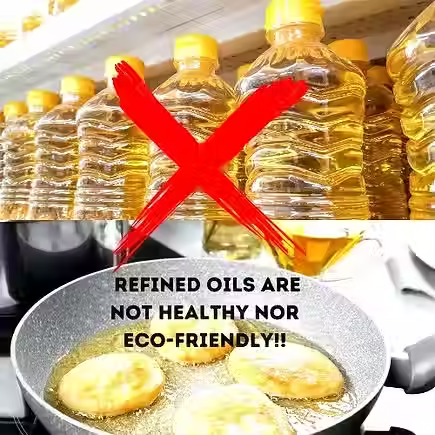
1-Refined olive oil --> absolutely avoid this
2-Vegetable oil
3-Extra virgin olive oil --> highest quality
What is the difference
1-Extra Virgin olive oil (cold-pressed)
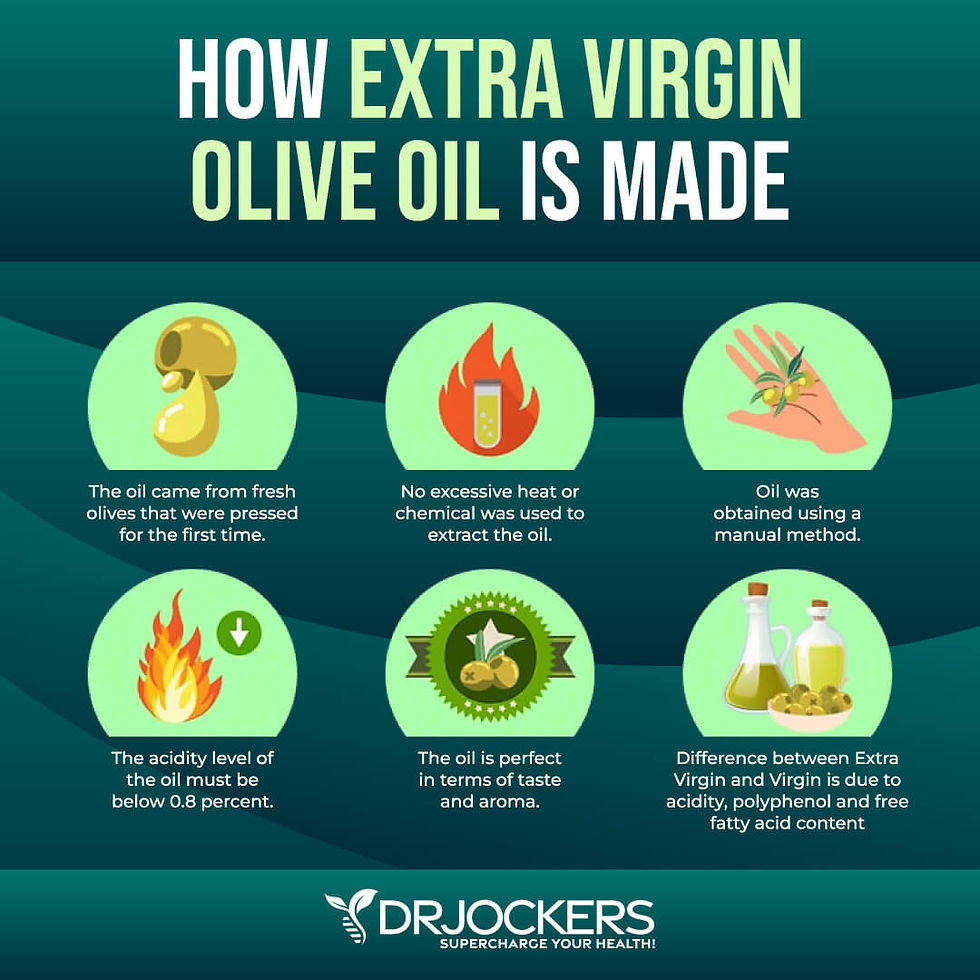
Extra virgin olive oil is produced by the first pressing using cold pressing, and no chemicals are used.
This oil is the least processed. Therefore, it is the purest.
Extra virgin olive oil, however, is produced under stricter quality standards than virgin olive oil, resulting in an exceptional nutritional profile that contributes to the robust, peppery flavor and low acidity.
Extra virgin olive oil is the highest quality, produced exclusively by mechanical means (cold-pressed) without heat or chemical treatment, resulting in a superior taste and color.
TIP: The Extra Virgin is used for liver detox and as a supplement.

2-Vegetable olive oil (cold-pressed)
Virgin olive oil is obtained through a second pressing after extra virgin olive oil has been produced. It can also come from riper olives. Although extra virgin olive oil is preferred, this variety is also considered to be of good quality.
Slightly lower quality than extra virgin olive oil, with slightly higher acidity and a less intense, but still good flavor.
They often use these for cooking . But no olive oil is suitable for heating. Due to the heat, the molecules change into trans fats. Then you get an oil that disrupts your hormones and is carcinogenic.
The Oils that can withstand heat: coconut oil, MCT oil, butter, ghee. See blog on why you should not heat vegetable oils.
3-Refined olive oil
This is processed olive oil. It starts as raw extra virgin olive oil but undergoes an extensive chemical and physical process to "so to speak" remove impurities, flavors, and substances that manufacturers deem undesirable.
Due to the processing, these oils often contain toxins that do not belong in them. They contain colorants and preservatives.
They are often mixed with other cheaper vegetable oils that are also processed. They are usually sold in plastic bottles.
What is the difference between virgin and extra virgin olive oil
The difference lies mainly in the quality and the acidity level.
The guidelines of the International Olive Council (IOC) state that virgin olive oil may have a free acidity of no more than 2% and may exhibit minor sensory defects.
This means that the olives used for "virgin olive oil" do not need to be in perfect condition or be pressed so quickly.
Extra virgin olive oil, on the other hand, must be made from top-quality olives, with a free acidity of no more than 0.8 grams per 100 grams and without sensory defects.
What should the packaging of a good olive oil be like?
You have three types of packaging
1-Dark glass
2-Allimnium bottle
3-Plastic bottle
AVOID ALUMINUM AND PLASTIC!!!
Everyone knows by now that aluminium and plastic are harmful.
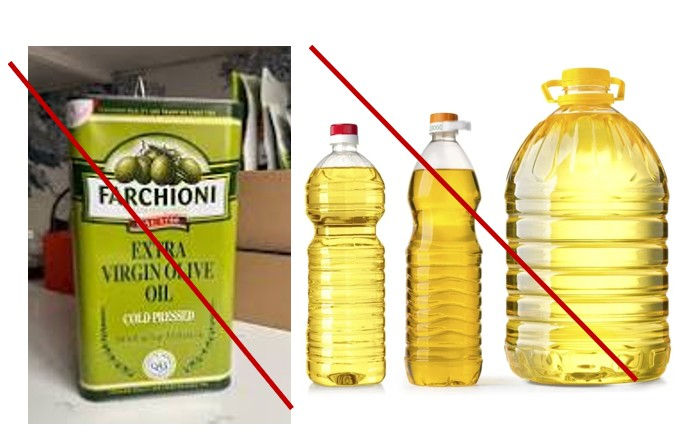
This is good olive oil. A dark glass bottle

Avoid oxidation in olive oil bottles. Buy smaller bottles.
People often think of buying large bottles of olive oil so they can use the bottle for a long time. But as soon as you open the bottle, the olive oil in the empty part oxidizes.
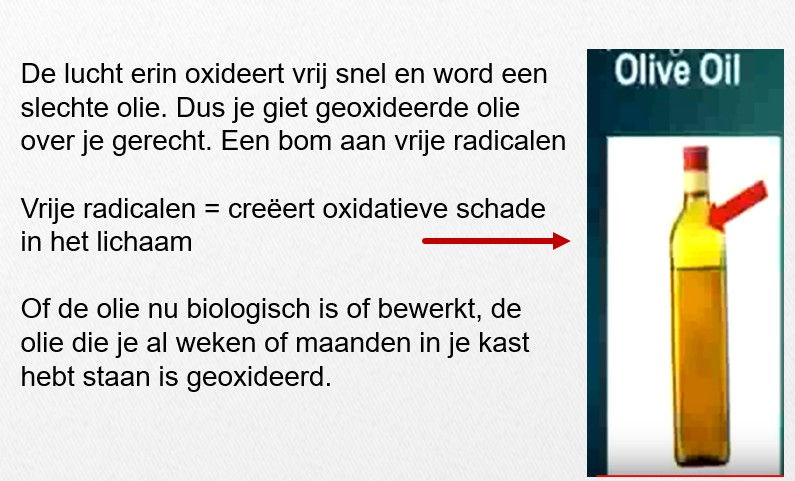
So, the longer the bottle is open, the more oxidation. Then you pour the olive oil over your salad or dish, and you create a bomb of free radicals in your body. An excess of free radicals and a lack of antioxidants in your body leads to chronic diseases (oxidative stress).
Therefore, preferably buy 100ml or 250ml.
500ml and 1-liter olive oil is good for a very large family and/or for restaurants.
Gezond wereldnieuws sells pure Extra Virgin Olive Oil. See webshop.

Videos
Sources
Research product benefits of olive oil
The Rise of Seed Oils: Why You Should Avoid Them
Olive Oil: Health Benefits, Best Sources and How to Use It
Dr. David Jockers
What Is the Difference Between Virgin and Extra Virgin Olive Oil?
Olive Oil and Longevity: Can It Help You Live Longer?
Is Olive Oil Good for You? Benefits for Your Heart & Brain
Does Moroccan Olive Oil have the Highest Polyphenols?


Comments